Getting troops ready for deployment is about survival, plain and simple. It’s not just theory. But commanders usually hit a massive wall when trying to find good training setups. Building physical shoot houses or fake city streets? That absolutely destroys defense budgets. Factor in the cost of blank rounds, the constant risk of guys getting hurt during drills, and the fact that you can’t just pick up and move concrete walls for a new scenario. It becomes a logistical nightmare fast.
Our enemies adapt daily. So why are our training methods stuck in the past?
This is why Military VR Simulators are quietly taking over modern defense playbooks. And KOMINA is pushing things a massive leap forward. We aren’t talking about handing out consumer VR goggles here. They’ve built a military-grade combat ecosystem designed to trigger real adrenaline dumps and sharpen lethal precision, all without a single drop of actual risk.
Let’s look at why old-school combat drills are quickly becoming obsolete.
Real Gear, Real Consequences
Hand an elite operator a flimsy plastic gaming controller, and watch how fast you lose their respect. You just can’t build combat instincts using arcade toys. It doesn’t work.
KOMINA gets this. They fix the problem by giving troops heavy-duty tactical hardware. Soldiers run their drills holding 1:1 replica weapon controllers. The weight, the balance, even the recoil—it’s calibrated to match their real service rifles perfectly.
But the immersion goes deeper. Every operator has to wear a haptic vest. Say someone gets sloppy and takes a virtual hit, or stands too close to an explosion. The vest literally punches them in the chest with a hard physical shock. That instant consequence stops anyone from treating the drill like a video game. The brain feels the hit, registers the threat, and automatically builds the muscle memory needed to hit the dirt and return fire.
Mastering CQB Chaos
Standing in a straight line on a flat firing range only teaches a guy how to pull a trigger. Real modern combat, especially Close Quarters Battle (CQB), is messy. Lethal threats pop out from literally any angle.
With the KOMINA setup, commanders can drop their squads straight into highly volatile urban combat with a couple of clicks. The digital enemies aren’t running on predictable scripts; they’re powered by erratic AI. They will set ambushes. They will shoot from blind spots. They might even use civilians as human shields. This intense, high-stress pressure cooker forces the squad to over-communicate, lock down their spacing, and make life-or-death calls in fractions of a second.
The AAR: Hard Data Beats Guesses
In the middle of a live physical drill, instructors are going to miss things. It’s inevitable. Trying to remember who forgot to check their corner, or who flagged a buddy with their muzzle, relies completely on human memory. And human memory is a massive liability.
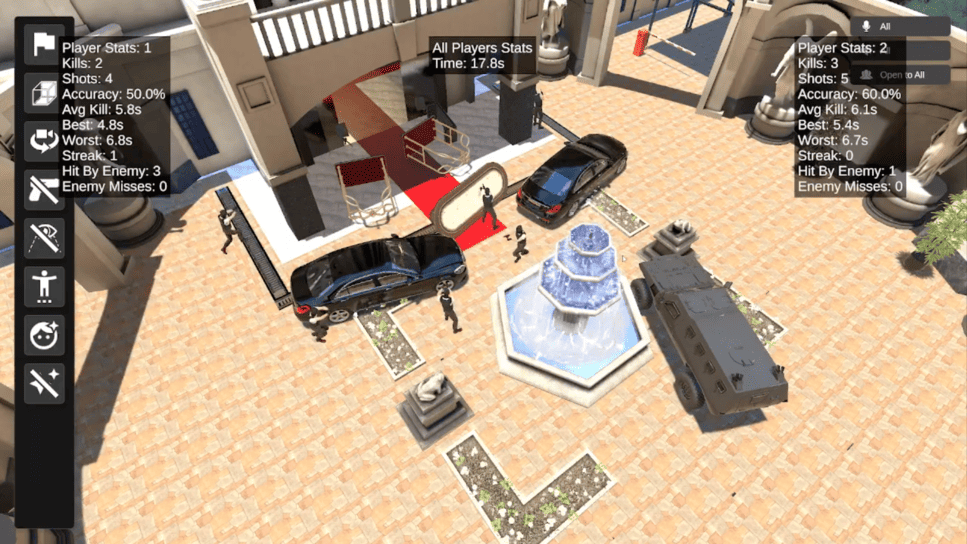
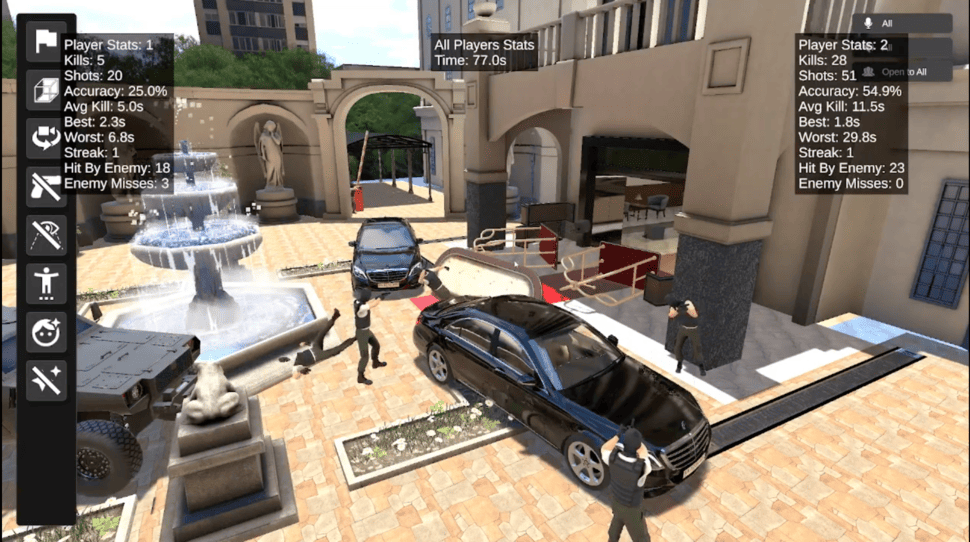
The KOMINA ecosystem bypasses this by tracking every single micro-movement silently in the background. Cover speed, muzzle discipline, exact shot placement—it’s all permanently logged.
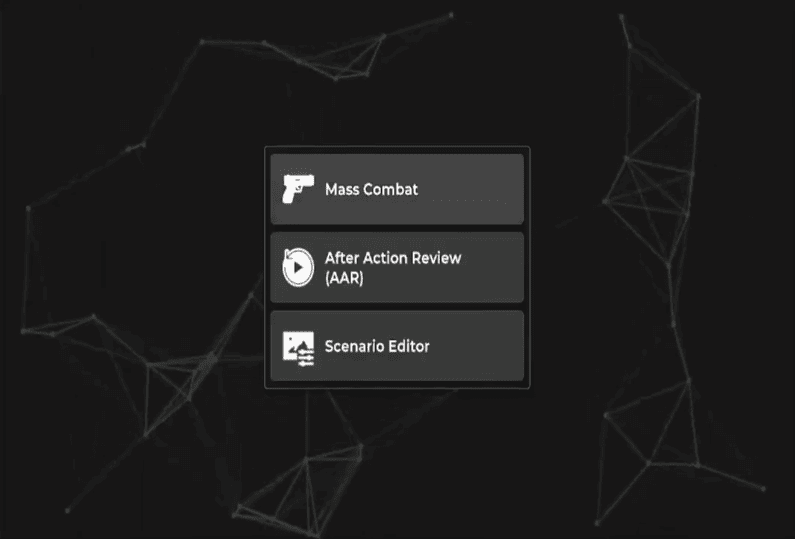
When the guns stop, the squad heads right to the After-Action Review (AAR). Instructors pull up the exact firefight in full 3D. You can view it from any angle, or even look through the eyes of the enemy. There is no more guessing about who made a fatal error. The hard data puts it right on the screen.
The Bottom Line: Lean Budgets, Lethal Squads
Torching your defense budget on rigid, old-school training buildings is a losing bet these days. Slipping a Military VR Simulator into your pipeline isn’t just a cool upgrade; it is a tactical necessity.
Partnering with KOMINA lets units slash their ammo and logistical costs to the bone, while aggressively ramping up the amount of reps their troops get. The end goal is pretty simple. When live rounds actually start snapping past your troops in a real warzone, you don’t want them to hesitate. You want them executing flawlessly, simply because they’ve already survived that exact nightmare hundreds of times in the digital world.